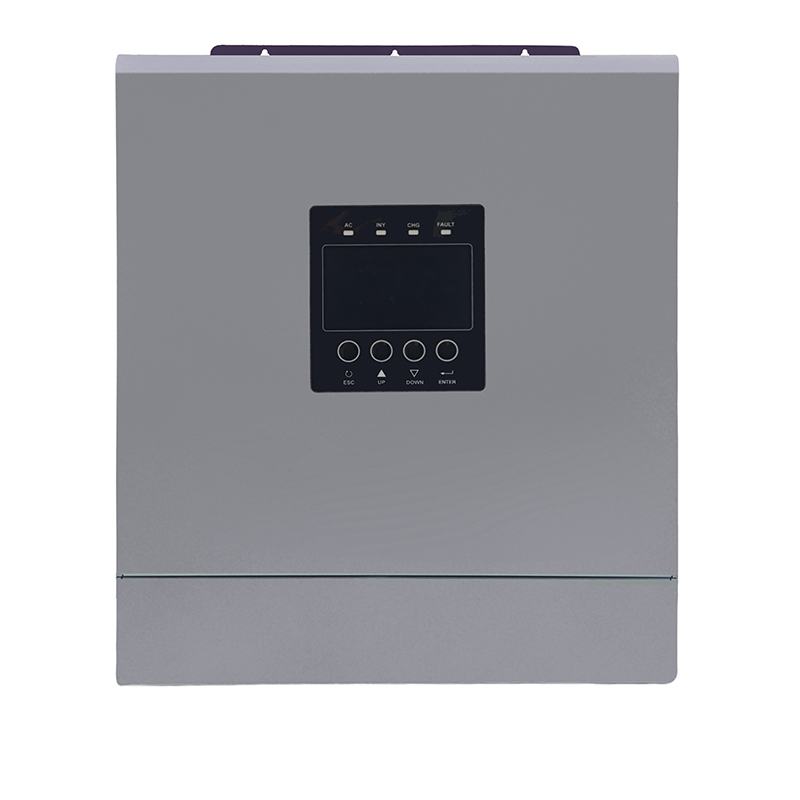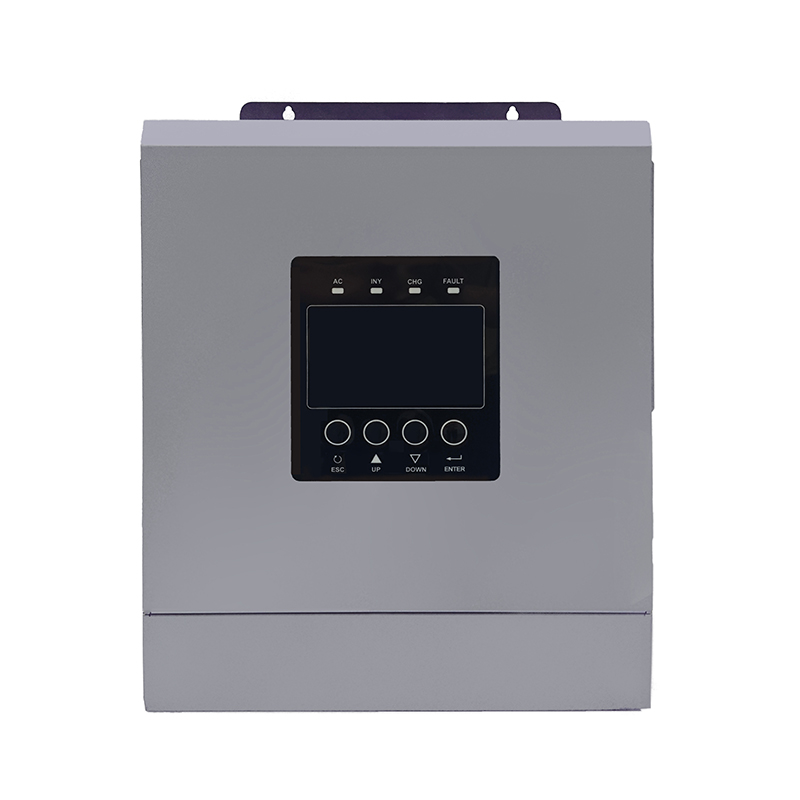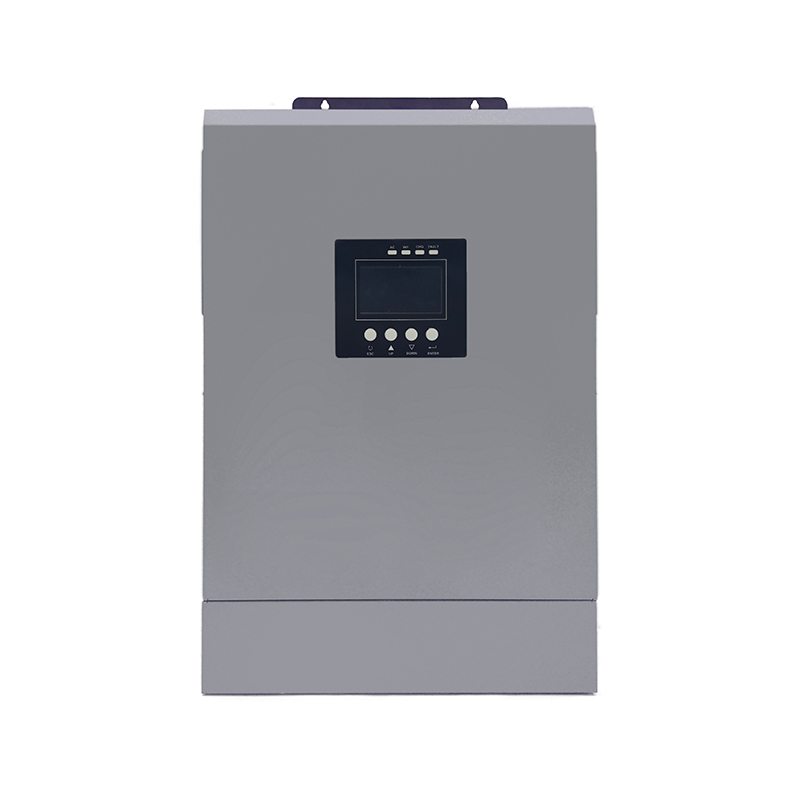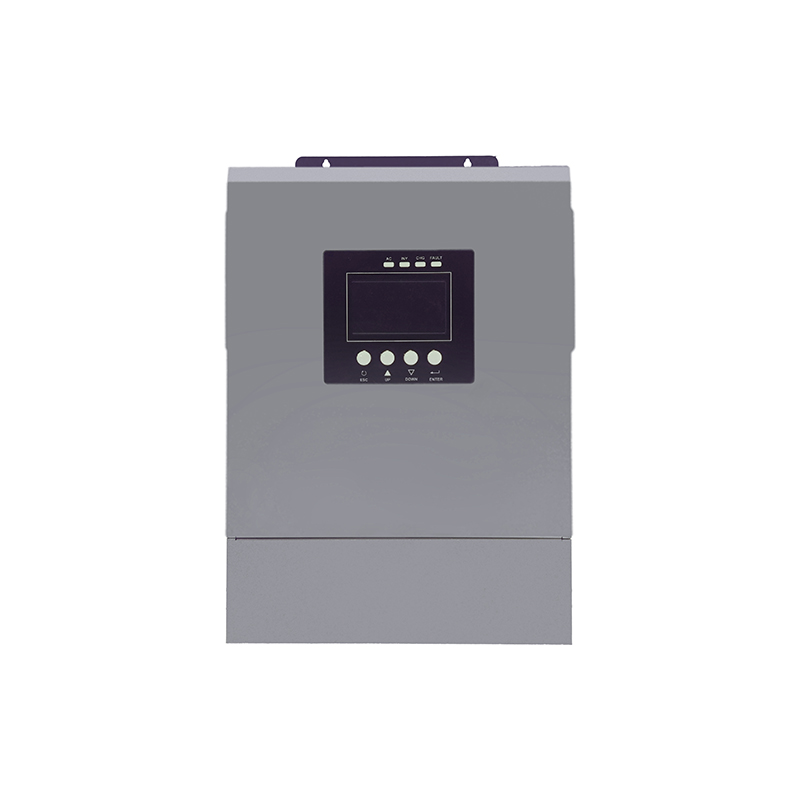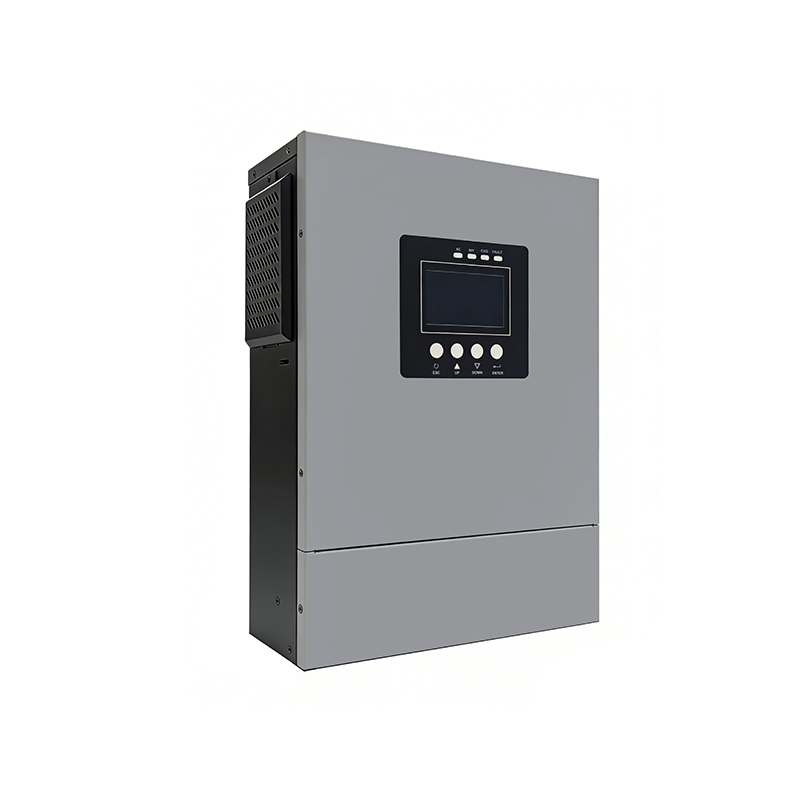
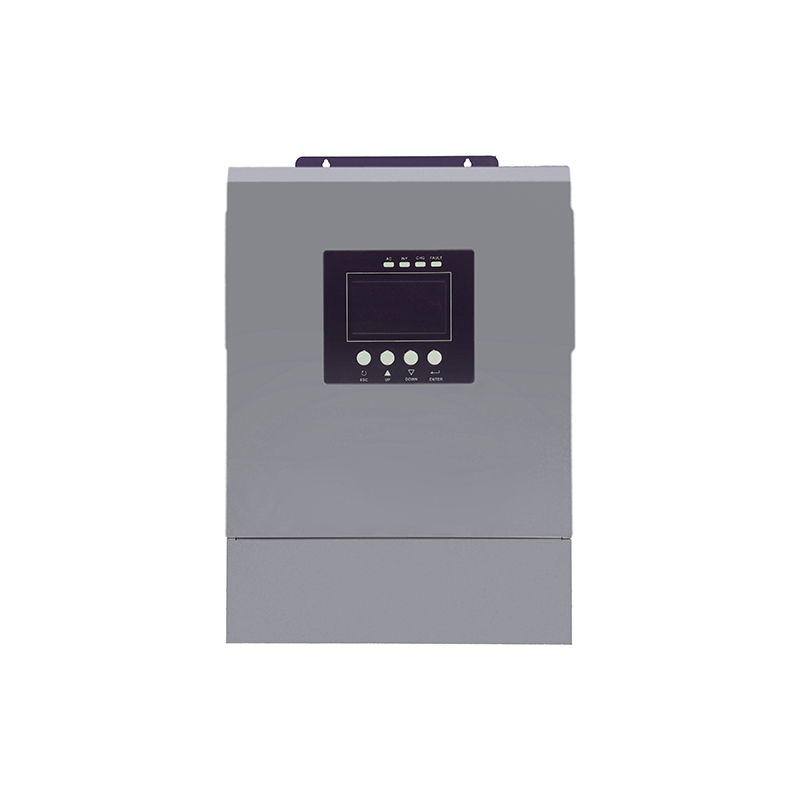
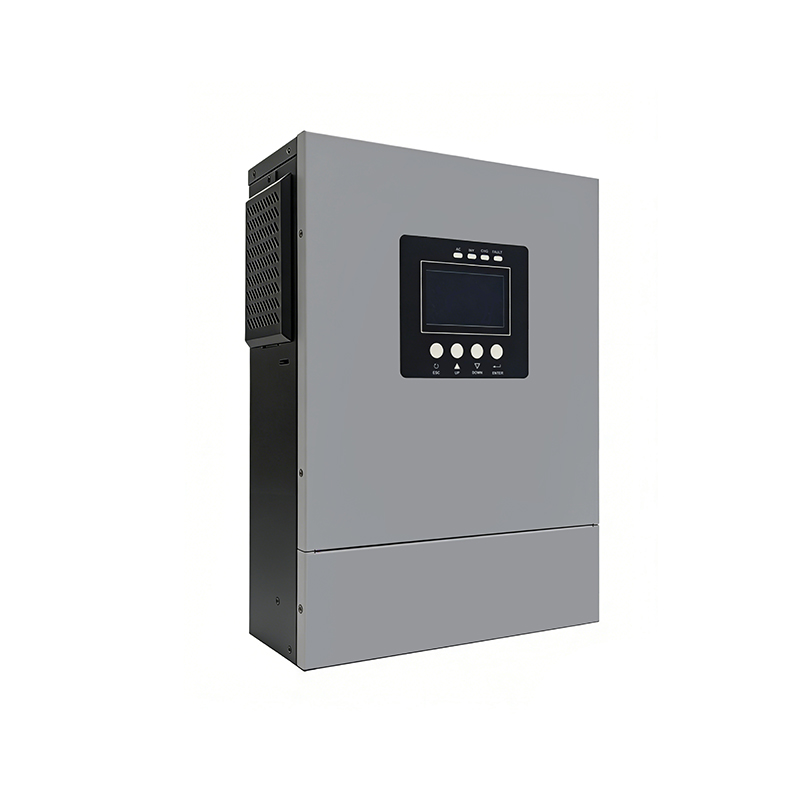
The Off-Grid Inverter WTI-NB-1.2K/12-220-F is a compact power conversion device designed to regulate and manage electrical energy flow within a standalone energy system. Based on the product images, the unit adopts a wall-mounted metal enclosure with a structured and stable design, integrating a front-facing control panel that includes a small LCD display and physical navigation buttons. The panel also features status indicators such as AC, INV, CHG, and FAULT, allowing users to visually monitor system conditions at a glance. The overall structure emphasizes durability and clean layout, with a balanced size that supports efficient installation while maintaining structural integrity.
From a user experience perspective, the inverter is designed for straightforward operation and clear feedback. The LCD interface provides direct access to system data, enabling users to monitor voltage levels and operational status in real time. The physical buttons allow precise control over system settings without requiring external devices. The compact form factor improves handling during installation, while the controlled operating noise level ensures stable performance during continuous operation. Communication interfaces support data access and system monitoring, enabling users to manage the inverter locally or remotely. This combination of physical interface and digital communication ensures consistent usability and efficient system interaction.
| Model | WTI-NB-1.2 K/12-220-F |
| AC Input | |
| Nominal Voltage | 208/220/230/240V Ac,L+N+PE |
| Frequency Range | 50/60Hz |
| Input Voltage Range | 170-280 PC;90-280 APP |
| Current Input (Max Continuous) | 5A |
| AC Output | |
| Output Voltage | 208/220/230/240V Ac,L+N+PE |
| Rated Power | 1.2kW |
| Power Factor | ≥0.99 |
| Current Output (Maximum Continuous) | 5.45 |
| Max Output Overcurrent Protection / Bypass | 10A/min |
| Max Output Overcurrent Protection / Battery | 102-120% @1min 120-200% @10s |
| Battery | |
| Battery Type | LFP |
| Rated Voltage | 12V |
| Voltage Range | 10.5-14.6V |
| Max Charging Current | 100A(AC+PV) |
| Default Charging Current | 40A |
| Default Utility Charging Current | 40A @Utility Only |
| PV Input | |
| Number Of MPPT / Strings Per MPPT | 1/1 |
| Max DC Input Power | 800W |
| Max Open Circuit Voltage | 115V |
| MPPT Voltage Range | 17-115V |
| Startup Voltage | 20V |
| Max MPPT Charging Current | 40A |
| Max DC Input Current | 18A |
| Maxi DC Short Circuit Current | 20A |
| Features | |
| Parallel Operation | - |
| Protection Degree (IP Rating) | IP20 |
| General Parameters | |
| Noise | 50dB |
| Dimensions | 320*229*97mm |
| Weight | 3.6kg |
| Display And Communication | |
| Display | LCD(3.3") |
| Communication | 485/CAN/wifi |
Supporting Solar Power, Mains Power And Battery Connection
DPS Digital Control Technology, Dual-Transformer Online Design, Adopting Input PFC Technology, Input Power Reaches 0.99, Efficient Inverter Topology Output
New Type Of High-Efficiency MOSFET, Less Heat Generation, Smaller Size,longer Lifespan
Combined With WENTAl ESS, Optimized Design, Longer Battery Life
'0' V Start-Up
Equipped With An External WIFI Module, It Can Be Remotely Monitored Via A Mobile App (optional)
The inverter supports small-scale residential backup systems where stable power is required for essential electrical loads. With a rated output of 1.2 kW, it can maintain basic household circuits while ensuring voltage stability within the standard range. The system allows structured monitoring through its integrated interface, enabling users to track operational status in real time. The controlled battery voltage range ensures consistent energy storage performance, allowing reliable power availability during interruptions and maintaining system readiness over extended periods.
In isolated living environments, the inverter provides a reliable solution for managing electrical energy. The wide AC input range allows the system to accept variable auxiliary power sources without interruption. The structured charging system ensures that stored energy is maintained efficiently, supporting continuous operation in locations without stable grid access. The integrated display and control interface allows users to monitor and adjust system parameters directly, improving usability in remote environments where technical support may not be readily available.
For small office environments, the inverter ensures stable electricity supply for essential equipment. The controlled output current supports consistent operation of devices requiring steady voltage levels. The system’s monitoring capabilities allow users to track energy usage and system performance, improving operational efficiency. Communication interfaces enable integration with monitoring systems, supporting centralized control and ensuring that electrical performance remains stable during daily operations.
Telecommunication systems require consistent and uninterrupted power supply, and the inverter supports stable voltage output under varying input conditions. The low operating noise level ensures that the unit can operate within controlled environments without causing disturbance. The photovoltaic input capability allows extended operation using renewable energy sources. Communication protocols enable remote monitoring, ensuring that system performance can be tracked without requiring on-site inspection.
As a backup power solution, the inverter provides controlled energy transition between sources, maintaining stable output during power interruptions. The structured charging system ensures that stored energy is available when needed, while the LCD interface allows users to monitor system readiness continuously. This ensures that the system remains prepared for unexpected outages, maintaining consistent performance and reducing downtime.
In agricultural environments, the inverter supports stable energy supply for small-scale equipment. The consistent output ensures reliable operation under varying environmental conditions. The photovoltaic input range allows flexible solar panel configurations, supporting energy generation in open areas. The system maintains stable performance across extended usage periods, ensuring continuous operation without interruption.
For temporary or mobile installations, the inverter provides a compact and lightweight solution that supports flexible deployment. The system supports multiple energy inputs, allowing it to adapt to different power configurations. The integrated monitoring interface allows users to track system performance and make adjustments in real time. This ensures stable operation even in changing environments, supporting efficient use across different installation scenarios.