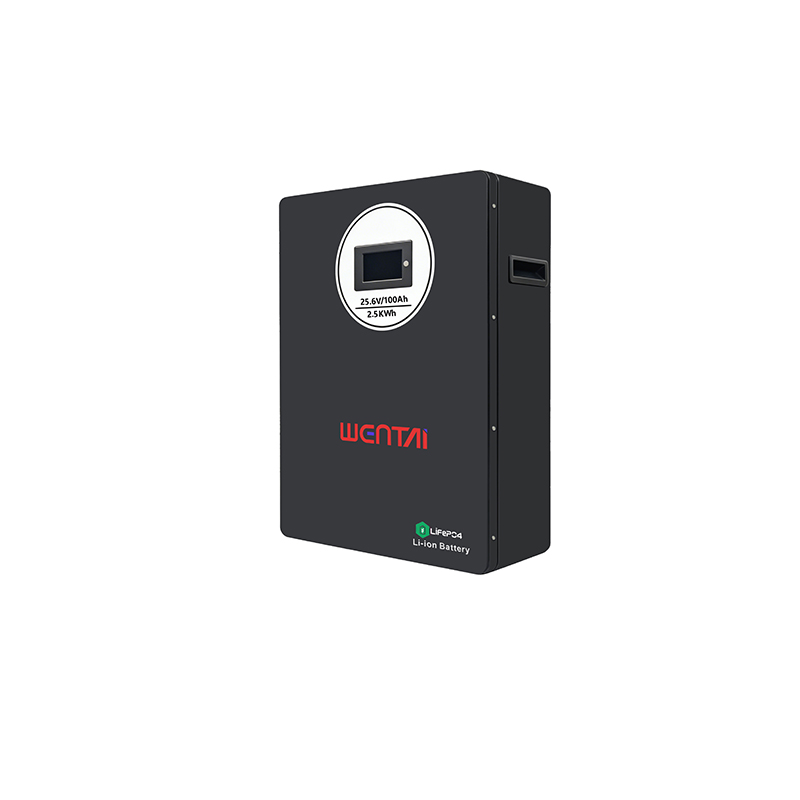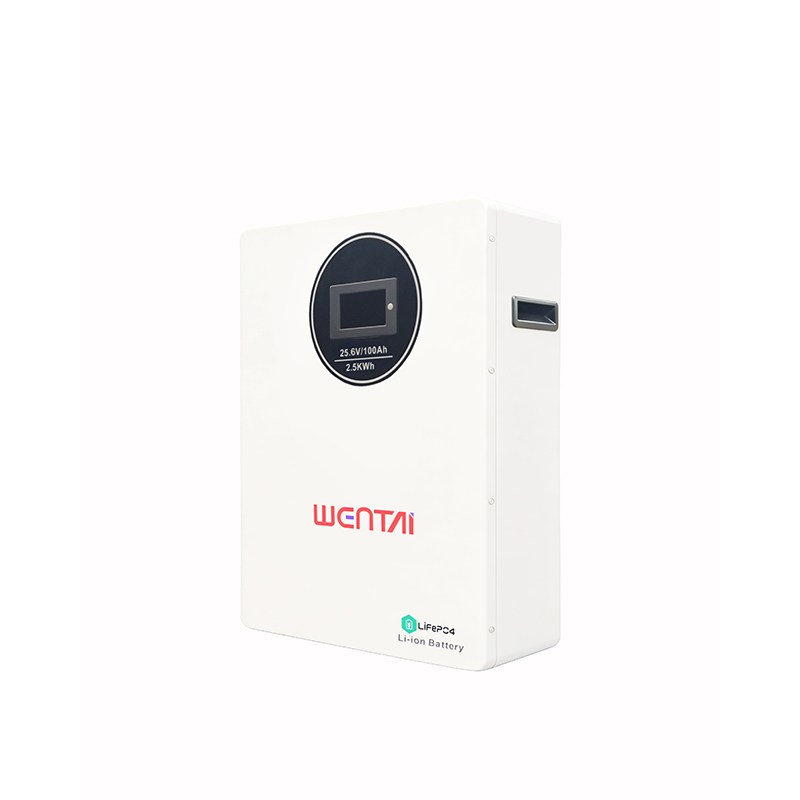
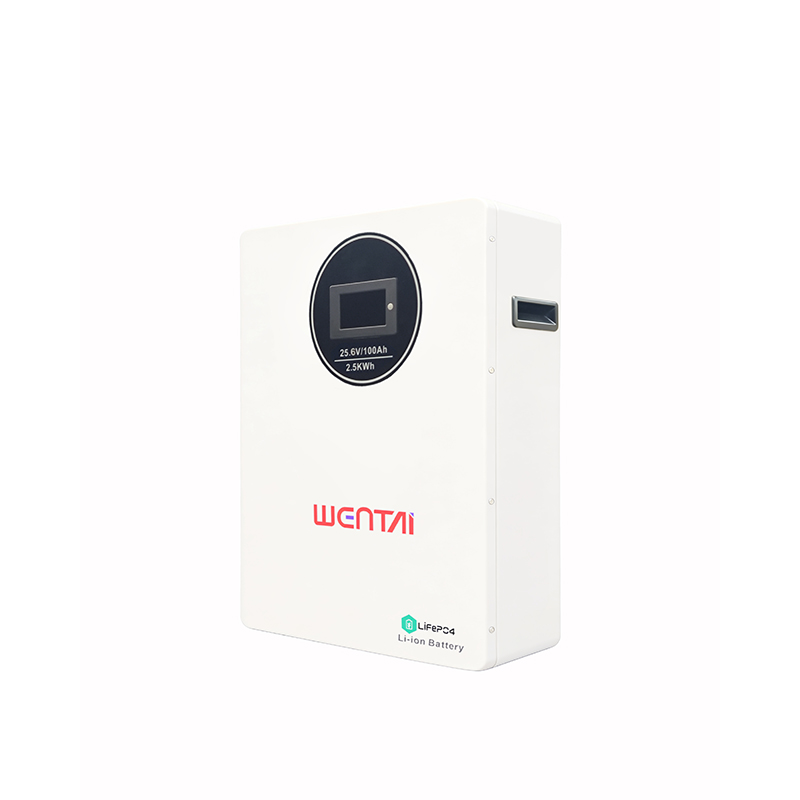
The Energy Storage System WTH-2.5K/8S-C is a compact lithium-based energy storage unit designed to store and manage electrical energy within an integrated power system. Based on the product image, the unit adopts a vertical rectangular enclosure with a clean front panel design, integrating a circular display interface that shows key electrical information such as 25.6V and 100Ah. The enclosure is constructed with a solid outer shell, and side handles are integrated to support installation and positioning. The overall design emphasizes structural stability and a simplified external layout suitable for controlled environments.
From a user experience perspective, the system focuses on clear interaction and accessible monitoring. The 3.2-inch display provides real-time operational data, allowing users to directly observe system conditions such as voltage and status without external tools. The communication system supports CAN, RS485, and RS232 protocols, enabling data exchange with external devices and mobile applications. Users can monitor system performance remotely through APP access, improving operational visibility. With a total weight of 28 kg and a compact structural design, the unit maintains stability during operation while remaining manageable during installation. The interface design and communication integration ensure that users can efficiently manage the system without complex configuration processes.
| Model | WTB-2.5K/8S-C |
| Cell | |
| Cell Chemistry | LiFePO4/C |
| Module | |
| Nominal Capacity (Wh) | 2.5K |
| Nominal Voltage | 25.6V |
| System | |
| Operating Voltage Range | 22.4V-29V |
| Standard Charging Current (A) | 30 |
| Max. Charging Current (A) | 60 |
| Continuous Discharge Current (A) | 60 |
| Peak Discharge Current (A) | 120 |
| Cycle Life (cycles) | 4000 |
| Self-discharge Rate | ≤3%/month |
| Operating Environment | |
| Charging Temperature (℃) | 0-45 |
| Discharging Temperature (℃) | -75 |
| Storage Temperature (℃) | -55 |
| Storage Humidity (RH) | 5-95% |
| Protection | |
| Overcharge Protection Voltage | √ |
| Over-discharge Protection Voltage | √ |
| Overcurrent Protection | √ |
| Short Circuit Protection | √ |
| Temperature Protection | √ |
| Active Balancing | 0.4A |
| Communication & Display | |
| CAN / RS485 / RS232 | |
| Mobile APP | √ |
| Display | 3.2" |
| Appearance | |
| Dimensions (Including Footmaster Wheels) | 425*375*150mm |
| Weight (Including Footmaster Wheels) | 28kg |
Use Brand-Name A Battery Cells (if Any Non-A Cells Are Found, Please Report Them). The Cell Design Life Is 8,000 Cycles @ 80% DOD
Using The Well-Known Brand BMS, The Entire Series Features Active Currentbalancing With Small Currents, Ensuring That The System Can Extend Its Servicelife By 20% In Normal Environments (compared To Our Non-Active Balancingsystem)
Ouchscreen Design, No Screws On The Front, Elegant And Stylish
Built-In Aerosol To Eliminate Safety Hazards
485/232 Communication
Support Viewing Of The APP
The system supports residential backup energy storage where stable power availability is required during interruptions. With a nominal capacity of 2.5 kWh and an operating voltage range of 22.4 V to 29 V, it ensures consistent energy supply for essential electrical loads. The continuous discharge current of 60 A supports stable power delivery, while the peak discharge current of 120 A allows handling of temporary demand increases. The system enables users to monitor energy levels through its display, ensuring that backup readiness can be maintained and verified at any time.
In remote living environments, the system provides a structured energy storage solution capable of maintaining stable power availability. The low self-discharge rate of less than or equal to 3 percent per month ensures that stored energy is preserved over extended periods without frequent recharging. The defined operating temperature range allows the system to function under varying environmental conditions. Communication support enables remote monitoring, ensuring that system performance can be tracked without requiring continuous on-site presence.
For small office setups, the system provides stable energy storage to support essential equipment. The nominal capacity of 2.5 kWh ensures sufficient energy availability for operational needs. The continuous discharge current of 60 A ensures consistent power delivery, maintaining stable operation of electrical devices. The communication interfaces allow integration with monitoring systems, enabling centralized tracking of energy usage and improving operational efficiency within office environments.
Telecommunication systems require consistent and uninterrupted energy storage, and this system provides stable performance with controlled voltage and current parameters. The peak discharge current of 120 A allows the system to handle short-term demand increases, ensuring continuous operation of communication equipment. Communication protocols enable remote monitoring, allowing operators to track system performance and ensure reliability without requiring on-site inspection.
As part of a backup energy system, the unit ensures that stored energy is available during power interruptions. The controlled charging current configuration allows efficient energy storage, while the stable voltage range ensures consistent output during discharge. The integrated display allows users to monitor system status in real time, ensuring that backup readiness is maintained. The system’s cycle life supports long-term reliability in repeated backup scenarios.
In agricultural environments, the system supports stable energy storage for equipment requiring consistent power. The capacity of 2.5 kWh ensures that energy is available for extended operational periods. The defined discharge current supports stable power delivery, ensuring continuous operation of equipment. The system maintains reliable performance over time, supporting agricultural processes that require uninterrupted energy supply.
For mobile or temporary installations, the system provides a compact and stable energy storage solution. The weight of 28 kg ensures structural stability while allowing manageable transportation. The communication interfaces enable real-time monitoring of system performance, allowing users to adjust energy usage as needed. The defined charging and discharging parameters ensure that the system operates consistently across different deployment scenarios, supporting flexible use in changing environments.